

The most striking wall finish isn’t always the right one for the room. In Dubai, a richly veined surface or sculptural panel can set the tone, but its success depends on its location, how it relates to lighting and joinery, and the demands of everyday use. This guide to luxury wall cladding and decorative paneling Dubai explains how to make those choices part of a considered interior, rather than selecting a feature in isolation.
It’s natural to focus first on colour, texture and visual impact. Yet a finish that feels perfect in a showroom may look different in a bedroom, living area or entrance, where light, touch and maintenance shape the experience. A sound choice balances design intent with practical requirements, including the wall substrate, panel junctions and installation details.
Here, you’ll compare popular material approaches and learn what to consider for different rooms, Dubai’s climate, and the way panels meet lighting, cabinetry and surrounding finishes. The aim is to create a clear shortlist and a more useful project brief, with wall cladding planned alongside the wider renovation or fit-out from the outset.
Key Takeaways
- Compare timber-look, stone, porcelain, metal and textured panel finishes by the atmosphere they create and where they may work best.
- Use this guide to luxury wall cladding and decorative paneling Dubai to shortlist options based on room use, design intent and project requirements.
- Assess upkeep and performance using the selected material’s documentation and the intended installation location.
- Build a stronger brief by recording wall dimensions, openings, corners, existing surfaces and the finish you want to achieve.
- Plan wall treatments alongside lighting, joinery and other interior elements as part of a coordinated renovation or fit-out.
Why choose luxury wall cladding and decorative paneling in Dubai?
Paint adds colour to a surface; cladding and decorative paneling add a layer of material, texture or relief. Wall cladding is an applied finish system that covers a wall, while decorative paneling is an arranged surface treatment used to create pattern, depth or emphasis. The terms can overlap, but this distinction helps clarify whether the brief is to cover a surface, shape its appearance, or do both.
These finishes can create a focal point, add warmth or tactility, and give a plain wall a more considered architectural character. Their effect depends on scale and placement. A feature wall can anchor a living area, frame a bed or define an entrance without making every surface compete for attention. Extending panels across a room creates a more immersive effect, but needs careful coordination with doors, windows, furniture and adjacent finishes.
The general idea of cladding as an applied covering is also explored in Siding (construction). Interior decorative treatments have their own design and installation considerations, so exterior cladding references shouldn’t be taken as evidence that a material suits an indoor application.
Where decorative wall finishes make the strongest design impact
Start by identifying the room’s focal point. In a living area, a treatment behind seating or a media unit can anchor the composition. In an entrance hall, a defined panel layout can make the arrival feel intentional. Bedrooms may benefit from a composed wall behind the bed, while a dining area can use texture to create a distinct sense of place.
Check the proportions before settling on a layout. A feature wall should relate to the room’s width and height, rather than carrying a pattern from floor to ceiling by default. Where possible, align panel breaks with furniture edges, doorways or existing architectural lines. This helps the finish feel integrated instead of added on. In Dubai villas and apartments, ceiling height, natural light and surrounding finishes all affect how the same treatment reads, so review the design in its actual setting.
How the Dubai setting shapes the initial brief
Before choosing a finish, consider how the room is used and what conditions the wall experiences. Note whether direct sunlight reaches the surface, how the space is ventilated, and whether indoor humidity may vary. A wall in a bright living room, for example, faces different conditions from one in a more enclosed area.
Keep interior and exposed outdoor applications distinct. A material suitable for an interior wall isn’t automatically suitable for an exterior or exposed area. Compare the product documentation with the intended location and actual site conditions, including the substrate and installation method. This makes it easier to specify a finish that suits both the design and its setting. For a luxury wall cladding and decorative paneling Dubai brief, record the visual effect you want as well as the conditions the selected wall treatment needs to accommodate.
Which luxury wall cladding materials and finishes suit your design?
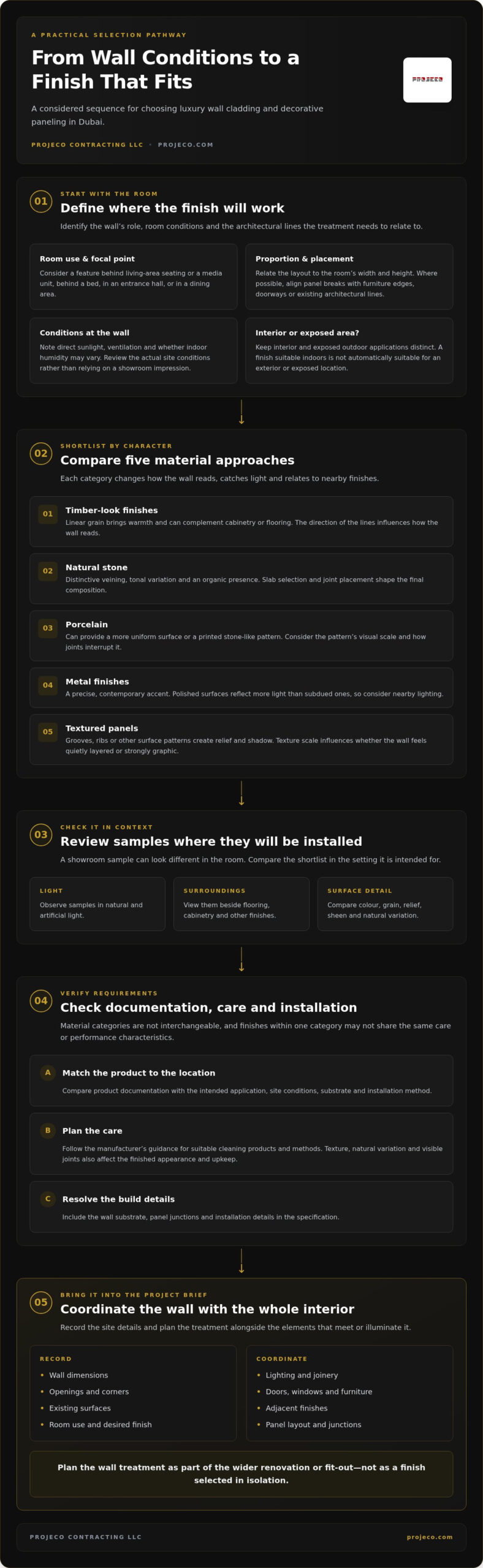
Material choice shapes more than colour. It affects how a wall catches light, how much visual movement it brings to a room, and how it relates to existing finishes. Timber-look surfaces, natural stone, porcelain, metal and textured panels are broad categories, not interchangeable solutions. Shortlist them by the character you want and the conditions of the intended location.
Choose a wall finish by balancing its visual character with the room’s conditions and the care its documented specifications call for. This keeps the design decision grounded in both appearance and everyday use.
Compare material character, appearance, and upkeep
Each category creates a different effect. Compare actual samples in the room where they’ll be installed, since colour, grain, relief and sheen can change under natural and artificial light. Look at samples beside flooring, cabinetry and other finishes, rather than judging them on a plain showroom background.
- Timber-look finishes bring a linear grain and a sense of warmth. Their pattern can complement cabinetry or flooring, while the direction of the lines influences how a wall reads.
- Natural stone offers distinctive veining, tonal variation and an organic presence. Slab selection and joint placement shape the final composition, so variation is part of the design decision.
- Porcelain can present a more uniform surface or a printed stone-like pattern. Consider the pattern’s visual scale and how joints will interrupt it across the wall.
- Metal finishes can add a precise, contemporary accent. A polished sheen reflects more light than a subdued surface, so consider how the finish will interact with nearby lighting.
- Textured panels create relief through grooves, ribs or other surface patterns. Their shadows add depth, while the texture’s scale affects whether the wall feels quietly layered or strongly graphic.
For each option, establish how the surface should be cleaned and which products or methods are suitable by following the manufacturer’s guidance. Texture, natural variation and visible joints all affect the finished appearance, as well as the effort involved in keeping it presentable. Don’t assume that two finishes in the same category have identical care or performance characteristics.
Coordinate finish choices with Dubai interiors
Assess the proposed wall in its actual setting. Consider direct sunlight, ventilation, indoor humidity and everyday use, then compare those conditions with the selected product’s documentation. Claims about fading, heat, moisture resistance or durability should be based on specific product information, not assumptions about an entire material category.
Make sure the colour and texture belong to the wider interior. A warm timber-look surface may sit comfortably beside existing joinery, while a veined stone effect or sculptural panel may call for quieter neighbouring finishes. Check samples beside flooring, cabinetry and furnishings, and view them under the room’s lighting. This helps the wall treatment complement the property’s palette and architectural character instead of competing with it.
For a considered luxury wall cladding and decorative paneling Dubai scheme, include the intended finish in the wider renovation or fit-out brief early. Projeco’s contact page is a starting point for discussing how the wall treatment fits into a coordinated interior project.
Comparing luxury wall cladding in real interiors
A finish that looks compelling in a sample can feel different across an entire wall. Compare materials in the context of the room, the area to be covered and the care specified by the manufacturer. The table offers a starting point, not a performance guarantee: suitability depends on the exact product, its documentation and the intended installation location.
| Finish category | Visual character and typical use | Upkeep considerations | Specification checks |
|---|---|---|---|
| Timber-look surface | Linear grain can bring warmth to a living room, bedroom or joinery backdrop. | Follow the product’s cleaning guidance; grooves and grain patterns may affect how dust is seen. | Review product documentation for the intended location, finish and installation method. |
| Natural stone | Veining and natural variation create a distinctive focal wall or refined entrance feature. | Care requirements depend on the selected stone and finish; follow manufacturer instructions. | Plan for variation, joint placement, substrate and edge details. |
| Porcelain | A consistent surface or stone-like pattern can suit a composed feature or broader treatment. | Use the cleaning methods specified for the selected product and finish. | Check pattern alignment, joints, fixing approach and location suitability. |
| Metal finish | Reflective or subdued surfaces can create a crisp accent in a contemporary interior. | Sheen and surface detail influence how marks appear; refer to care guidance. | Confirm suitability for the setting and coordinate edges, joints and lighting. |
| Textured panel | Grooves or relief add shadow and depth to a feature wall or selected area. | Assess how the texture can be cleaned using the manufacturer’s instructions. | Check the panel layout, transitions, fixing details and intended application. |
Compare feature walls, full-height panels, and partial treatments
A feature wall concentrates attention on one surface, which can suit a clear focal point without adding pattern to every wall. Full-height paneling creates a more continuous architectural statement, but its visual weight should be considered against room proportions and existing details. A partial treatment can define a zone or relate to furniture height. The right coverage depends on the space and design intent, not a single rule for Dubai homes.
Balance visual impact with maintenance and longevity
Look beyond the face of the material. Repeated joints, exposed edges and textured grooves affect visual continuity and can influence how the surface is cleaned. In a frequently used area, weigh the desired relief or sheen against the care instructions and the room’s everyday use. Don’t assume a material category alone predicts durability or upkeep; rely on product documentation for the specified application.
The best finish is the one suited to its room, its use and its documented care requirements. For luxury wall cladding and decorative paneling Dubai interiors, a restrained feature may be more coherent than extensive coverage when the room already has strong architectural lines, expressive furnishings or several competing focal points.
What should you plan before specifying decorative paneling?
A well-prepared brief turns a finish preference into a workable part of the interior scheme. Before choosing a panel layout, record what the wall needs to achieve, what is already fixed in the room, and which site conditions may affect material or installation decisions. This is especially useful when lighting, electrical points and joinery are being planned as part of the same renovation or fit-out.
Prepare a clear wall-cladding design brief
Bring together the practical and visual information first. Reference images can communicate the intention, but identify whether you’re drawn to their colour, texture, pattern, scale or panel arrangement. Then note how the proposed treatment should relate to existing finishes and the room’s architecture.
- Define the purpose. State whether the wall should create a focal point, introduce texture, frame a feature or bring visual continuity to the room.
- Identify the room and its use. Note how the space is used and whether the wall is likely to receive frequent contact, direct sunlight or changing indoor humidity.
- Record the wall condition. Describe the existing surface and any visible irregularities or previous finishes. A site assessment informs decisions about preparation and installation, rather than relying on photographs alone.
- Set out the finish direction. Gather references and specify the qualities that matter, such as a particular tone, grain, relief or sheen. Relate these to the property’s existing palette and architectural character; coordinated choices can also be considered alongside broader luxury interior finishes.
- Capture dimensions and details. Record approximate wall width and height, door and window openings, corners, skirting and adjacent surfaces. These details help establish panel proportions and where edges or transitions will fall.
Projeco’s contact page provides a way to discuss how the wall finish fits into a Dubai renovation or fit-out plan.
Coordinate drawings, lighting, and fit-out details
Consider panel divisions alongside switches, outlets, lighting positions, doors and built-in joinery. For instance, a vertical layout can feel deliberate when it relates to a cabinet edge, while a division that cuts awkwardly across an opening may disrupt the composition. Include skirting and adjacent finishes so the wall treatment has a clear start, stop and transition.
Use drawings and site information to coordinate the design intent, but don’t treat a visual reference as an installation specification. The substrate, fixing method, edges and junctions depend on the selected material and project conditions. For luxury wall cladding and decorative paneling Dubai projects, let material documentation and the actual site inform those decisions. This helps keep the finish coherent from the first layout through to the wider interior.
How Projeco brings wall finishes into a cohesive Dubai interior
A wall treatment works best when it belongs to the room’s overall design, rather than being selected as an isolated feature. Projeco Contracting LLC incorporates wall finishes into its integrated design-and-build and residential fit-out work, coordinating them with the wider interiors of villas and apartments. Material, proportion, lighting, joinery and adjacent finishes all inform the design direction.
Connect the wall treatment to the complete interior
Consider a panelled surface alongside the furniture and built-in elements it will frame. Its lines might relate to a joinery layout; its tone might echo another finish in the room; its texture might provide contrast without competing with lighting or furnishings. These decisions matter in a whole-home scheme, where a distinctive wall should feel connected to the rest of the property. A consistent approach to villa interior design can carry a considered palette and architectural language from one room to another.
Projeco’s interior fit-out project examples show completed spaces and how their elements work together. Consider the overall composition, rather than assuming any one finish or panel treatment suits every project.
For luxury wall cladding and decorative paneling Dubai projects, coordination means keeping the design vision connected to practical project decisions. The selected finish, wall proportions, lighting positions, joinery interfaces and adjoining surfaces should be considered together. Product documentation and actual site conditions inform material and installation decisions, while the interior scheme establishes how the finish should look and relate to its surroundings.
Make the first project conversation productive
A few clear references can make an early discussion more focused. Bring photographs of the room, approximate wall dimensions and images that communicate the atmosphere you want to create. If a reference appeals because of its colour, texture, panel spacing or overall scale, identify that detail so the design intent is clear.
It also helps to describe how the room is used and what is already decided. Note existing flooring, joinery, furniture, lighting plans and any other finishes the wall treatment needs to complement. If the project covers several rooms, explain whether the aim is a single focal moment or a visual thread connecting spaces. This context supports a more coordinated discussion about the wall finish within the wider renovation or fit-out.
Projeco’s Dubai-based design-and-build approach brings design and execution into one residential project framework. The finish can be considered as part of the interior brief, with its appearance and relevant detailing aligned with the surrounding work.
The Projeco contact page is available for sharing your room references and wider interior context.
Shape your wall finish into a considered project brief
Your next step is to turn inspiration into a design direction that belongs to the property. Gather room photographs, approximate dimensions and references that show the atmosphere you want. Then consider how the finish should work with the spaces around it, whether you’re planning a single focal wall or a more connected interior scheme.
For luxury wall cladding and decorative paneling Dubai, Projeco Contracting LLC brings wall-finish decisions into an integrated design-and-build approach. As a Dubai-based firm operating across the UAE, Projeco works on residential renovation and interior fit-out for villas and apartments, connecting design intent with project delivery. This broader view helps place a wall treatment in context alongside the decisions shaping the home.
Bring your ideas to Projeco and develop them into a cohesive interior plan. Discuss your Dubai wall-finish project with Projeco and take the next step toward a finish that feels considered in your space.
Frequently Asked Questions
Is wall cladding suitable for homes in Dubai?
Wall cladding can suit Dubai homes when the selected finish is appropriate for its location and conditions. Consider how the room is used, whether sunlight reaches the wall, and the ventilation and humidity in that space. For luxury wall cladding and decorative paneling Dubai projects, use product documentation and site assessment to guide material and installation decisions, rather than assuming one finish will perform the same way everywhere.
Can decorative panels be used in both apartments and villas?
Yes, decorative panels can be considered for both apartments and villas. The layout should respond to the specific room, not just the property type. In an apartment, a treatment may need to work around a compact media wall or limited wall area; in a villa, a larger surface may call for carefully planned divisions. In either setting, relate the panel scale to the room and existing architecture.
How do I choose a wall cladding finish for a feature wall?
Begin with the feature wall’s role: should it frame a bed, define a seating area or create an arrival point? Then consider the room’s palette, lighting and nearby furniture. A strongly veined or deeply textured surface may become the focal point, while a restrained tone can complement expressive furnishings. Review a sample in the intended room, since daylight and artificial lighting can change how colour and sheen appear.
Can wall cladding be installed over an existing wall?
It may be possible, but the existing wall’s condition and the chosen system determine the appropriate approach. A site assessment should consider surface evenness, existing finishes, openings and how the installation will meet skirting, corners and adjacent materials. The selected product’s documentation also informs preparation and fixing requirements. Don’t assume that an existing painted or finished surface is ready to receive cladding without assessment.
Does decorative paneling make a room look smaller?
Not necessarily. The effect depends on the treatment’s coverage, colour, pattern and visual depth, as well as the room’s proportions and lighting. Extensive, high-contrast or strongly textured panels may draw attention to the walls, while a more limited treatment can define one area without dominating the room. Consider how panel divisions relate to doorways, furniture and sightlines before deciding how much of the space to cover.
How much wall cladding do I need for a room?
Measure the width and height of each wall you plan to cover, then subtract openings such as doors and windows to estimate the surface area. The required panel quantity depends on the product’s coverage dimensions and the planned layout. Corners, pattern alignment and cuts can affect the final amount, so use a measured drawing and the selected product’s installation guidance to refine the estimate before specifying materials.