

A coffee shop’s interior is part of the guest experience, not just a backdrop. Elite coffee shop interior styling in the UAE carries the concept through every detail, from comfortable seating and clear circulation to durable finishes and a memorable feature wall. When these elements work together, the space feels welcoming, practical, and distinctive.
Guests notice more than décor. They need room to settle in, lighting that suits the mood, and a layout that makes ordering and moving around easy. A coherent design connects these everyday comforts with the coffee shop’s brand.
This guide explores how seating, lighting, acoustics, durable materials, and expressive details can shape a better café interior. You’ll also learn how to balance visual appeal with the practical demands of a UAE coffee shop, creating a polished space without sacrificing comfort or function.
Key Takeaways
- Align colours, textures, furniture, and menu displays with one clear brand concept to make the café feel cohesive.
- Plan varied seating and clear routes so guests can work, talk, or relax without obstructing the queue.
- Choose furniture and finishes for both their visual character and their ability to handle regular use and cleaning.
- Use feature walls and distinctive lighting to create a memorable focal point while keeping the space comfortable for guests.
- Bring the design vision into a coordinated fit-out when a coffee shop project requires construction and interior execution.
1. Why is interior design so important for a coffee shop?
A coffee shop’s interior makes its brand tangible. Guests encounter its identity through the entrance, furniture, menu boards, materials, and lighting, not just a logo. A consistent concept brings these details together, so the café feels intentional rather than assembled from unrelated choices.
Start with three qualities that describe the brand, such as calm, crafted, and contemporary. Translate them into design choices: warm neutral colours, tactile oak, and simple furniture could express a relaxed artisan concept. A bold specialty-coffee brand might use dark finishes, precise lighting, and a graphic menu wall instead. The aim is to reflect what guests can expect from the coffee, service, and name, rather than follow a trend.
Colour and texture shape the atmosphere together. Earthy tones and neutral palettes can give a Dubai café a warm, composed foundation, while stone, linen, and oak add tactile variety. Use contrast deliberately: a light stone counter can stand out against darker shelving, and upholstery can soften harder surfaces. Repeating a material at the counter, on tables, or in a display niche creates visual continuity.
Dubai, Abu Dhabi, and Sharjah do not call for three fixed luxury styles. In any emirate, consider the café’s concept, site, and intended guests, then select details that fit. Options include mashrabiya screens, Arabic calligraphy, geometric tilework, or contemporary neutral finishes. Regional references work best as considered accents, not substitutes for a clear brand identity.
Design also connects a coffee shop to a longer cultural history. Mecca’s early qahveh khanehs date to the 1400s, Istanbul’s coffeehouses emerged in the 1500s, and Vienna’s coffeehouse culture became a civic institution from the late 1600s onward. These examples show how cafés can serve as social places as well as destinations for a drink.
For a UAE coffee shop fit-out, approvals depend on the emirate, premises, and work scope. Dubai Municipality approvals for F&B premises add 2 to 4 weeks to the overall café fit-out timeline. Sustainability and fire safety should also inform material selection and interior planning; reclaimed wood, recycled furniture, and low-VOC finishes are possible sustainability choices, while safety requirements depend on the applicable project approvals.
When selecting a design-and-build team, look for relevant café or F&B fit-out experience and coordinated execution, not just a firm’s name. Design directions in Dubai and Abu Dhabi can include warm minimalism, regional patterns, biophilic elements, and expressive concepts such as gallery-inspired interiors. A well-resolved concept brings branding, materials, and décor together in one coherent story.
2. Comfort-focused café seating, lighting, and layout
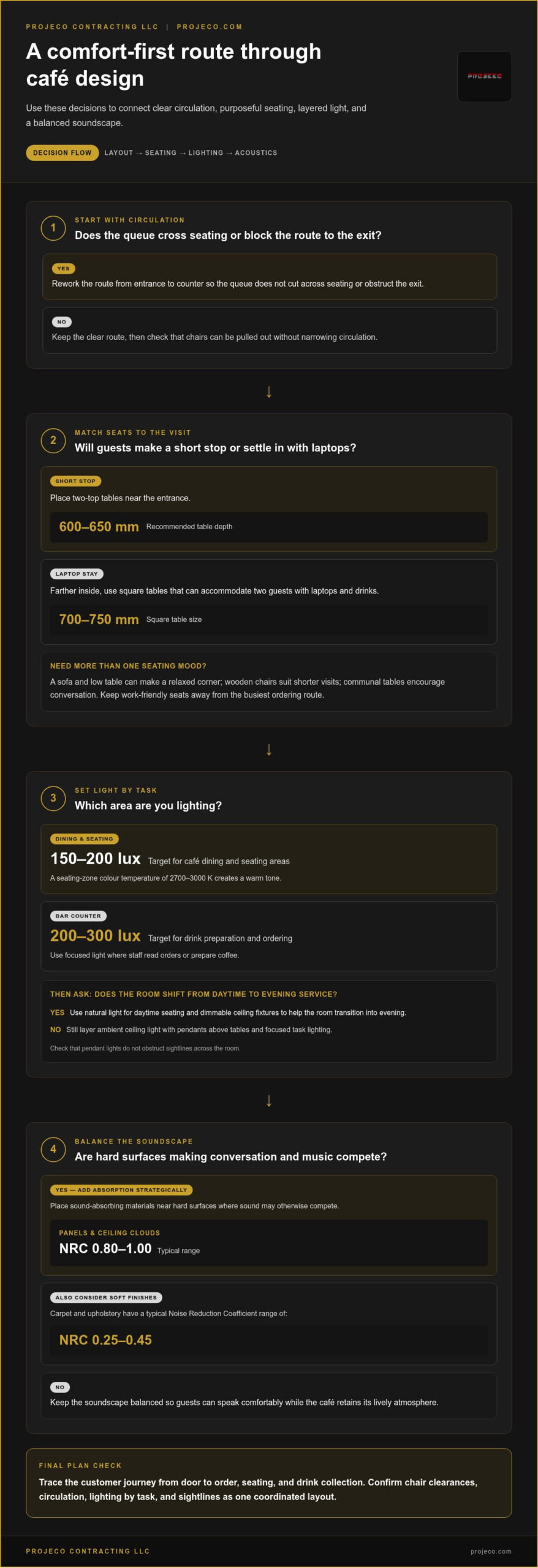
Comfort begins with the route from entrance to counter, then continues at the table. Keep queues from cutting across seating or blocking the path to the exit. Place short-stay two-top tables near the entrance, with a recommended depth of 600-650 mm. Farther inside, 700-750 mm square tables can better accommodate two guests using laptops alongside drinks. These distinctions help the layout serve different visit lengths.
Choose seating for different purposes. A soft sofa and low table can create a relaxed corner, while wooden chairs suit shorter visits and communal tables encourage conversation. Leave clear passages between groups so guests can move without disturbing others. In a compact café, position work-friendly seats away from the busiest ordering route. This keeps the space open and composed rather than crowded with furniture.
Layer lighting by task instead of using one bright setting throughout. Café dining and seating areas can target approximately 150-200 lux, while the bar counter can use approximately 200-300 lux for drink preparation and ordering. A seating-zone colour temperature of 2700-3000 K creates a warm tone. Combine ambient ceiling light with pendant fixtures above tables, then add focused light where staff read orders or prepare coffee.
Plan for changing light throughout the day. Natural light can define daytime seating, while dimmable ceiling fixtures help the room transition into evening service. Warm colour temperatures can complement timber and textured upholstery; cooler, brighter task lighting can make the counter easier to work at. Automated lighting can adjust brightness by time of day, supporting different uses while preserving the design’s character.
Acoustics matter alongside lighting. Sound-absorbing panels and ceiling clouds have a typical Noise Reduction Coefficient (NRC) range of 0.80-1.00, while carpet and upholstery typically range from 0.25-0.45. Use these materials strategically near hard surfaces, where conversation and music may otherwise compete. The aim is a balanced soundscape: guests can speak comfortably, and the café retains its lively atmosphere.
Before finalising the plan, map the customer journey from door to order, seating, and drink collection. Check that chairs can be pulled out without narrowing circulation, and that pendant lights don’t obstruct sightlines across the room. A coordinated design-and-build approach can bring lighting, furniture, and layout decisions together; discussing your café fit-out requirements is a practical next step when these elements need to be resolved as one scheme.
3. Durable furniture and finishes
In a coffee shop, furniture is part of the working environment, not just decoration. Customers pull chairs across floors, set hot cups on tables, and use counters throughout service. Choose each piece for its location and purpose. A compact chair by the entrance may need a different form from an upholstered seat in a quieter corner. Matching function to placement helps the interior feel consistent.
Natural stone and wood can bring lasting character to a café. Consider stone for a counter or tabletop, where its substantial, refined appearance supports the design. Wood can add warmth through table edges, shelving, or chair frames. Rather than mixing many finishes, repeat a small, deliberate palette in prominent areas. The result feels considered without requiring identical furniture in every zone.
Assess furniture against the routines it will face. For a table, check the stability of its base, the finish around its edges, and how easily the surface can be wiped. For a chair, examine the joints, seat support, and frequently handled contact points. A beautiful silhouette matters, but loose connections or hard-to-clean details can undermine everyday use.
Give upholstery the same practical consideration. A pale fabric sofa may suit a quiet lounge, while a darker, wipeable finish may work better near the counter. Consider seams, corners, and seat cushions, where crumbs and spills can collect. For a luxurious feel, pair one tactile upholstered element with hard-wearing wood or stone nearby. The contrast adds depth while keeping the scheme coherent.
Choose finishes to suit the café’s traffic patterns. Use robust table surfaces in busy dining areas, and reserve delicate decorative details for walls or shelves away from frequent contact. At the entrance, select floor and furniture finishes that look cohesive without making a fragile first impression. In a family-oriented café, rounded table edges and stable seating can support a more relaxed layout.
Before execution begins, review a sample board under the space’s actual lighting. Compare wood grain, stone tone, upholstery, and metal details side by side. Then consider how each choice looks beside menu boards, service counters, and nearby seating. This helps prevent mismatched finishes and supports furniture choices that balance luxury, regular use, and a consistent café identity.
4. Durable, easy-maintenance materials
For a UAE café interior, choose finishes according to location, cleaning routine, and visual role. Natural stone and wood can add depth, each with a distinct surface character. Use stone at the counter or on selected tables, then repeat wood in shelving or trim. A controlled palette helps the concept feel cohesive without covering every surface in the same material.
Begin with the busiest contact points. The counter handles cups, equipment, and frequent cleaning, while tables face spills and repeated wiping. Choose finishes for these jobs before selecting decorative accents. A stone counter can anchor the room visually, while a complementary table finish connects the dining area. Consider joints and edges carefully, since detailing affects appearance and access for cleaning.
For wood, decide where its grain should be visible and where it needs protection from daily contact. Shelving, wall details, and table edges can add warmth without making every high-use surface visually busy. For stone, consider the pattern and tone across adjoining pieces. A deliberate layout avoids abrupt changes between the counter, tables, and nearby wall finishes.
Ceilings need a different material strategy from counters. They shape the room’s overall impression, but guests do not handle them during service. Use ceiling finishes to support the concept and coordinate with lighting, rather than adding material just for novelty. Around the service area, keep the transition between ceiling, wall, and counter visually orderly so the working zone feels composed.
Plan for maintenance before making final finish selections. Set a routine cleaning schedule, then compare each material with the products and methods it requires. Smooth, accessible surfaces are straightforward to wipe, while intricate grooves or hard-to-reach joints need closer attention. For upholstery or decorative panels near tables, consider exposure to food and drink before finalising the scheme.
Natural stone and wood are useful starting points for a refined UAE café palette. Choose them according to their purpose, appearance, and cleaning needs, then coordinate them with other practical options. Reclaimed wood, recycled furniture, and low-VOC paints and finishes can also support more sustainable choices. Treat these as parts of one specification, not isolated gestures.
Before installation, review material samples together under the café’s planned lighting. Compare the stone with the wood, then assess both against the ceiling and table finishes. This can reveal mismatched undertones and help maintain a consistent visual language. Record the selected finishes by location, so ordering, installation, and future cleaning follow the same plan.
5. Feature walls and social media appeal
A feature wall gives guests a clear focal point and helps define the café’s character. In a compact Dubai coffee shop, a mural behind the seating area can frame the room without adding furniture. Neon signage can create a sharper contemporary accent, while a dramatic chandelier draws the eye upward. Choose one lead feature so the space feels composed, not crowded.
First decide what the wall should communicate. A hand-painted coffee illustration can signal craft, while a gallery-inspired arrangement can make the space feel curated. For a vintage cinema concept, framed artwork and restrained lighting may convey the idea more elegantly than covering every surface with film references. These choices let café interior design support conversation and brand recognition.
Consider how the feature looks from different guest viewpoints. A mural near a communal table should remain visible when chairs are occupied, while signage behind the counter can frame the ordering experience. Check the wall from the entrance, queue, and seated positions. These viewing points help ensure the feature enhances the room rather than competing with service.
Photogenic design takes more than a striking background. Layered lighting can prevent harsh shadows on a mural, and a nearby table or ledge can give guests a natural place to pause. Keep key details legible in daylight and evening conditions. A neon feature, for example, should add atmosphere without making nearby menus or faces hard to see.
Choose materials that suit the wall’s role and the café’s daily routines. A painted mural creates a broad visual statement, while applied lettering or a textured panel can add dimension to a smaller area. Keep high-contact zones easy to clean, especially beside dining tables or the collection point. Coordinating the wall finish with the counter and ceiling helps the feature feel integral to the concept.
Social sharing works best when the design invites a natural moment rather than interrupting the visit. Place a distinctive wall along a route guests already use, and keep circulation around it clear. A café can also build recognition with a signature motif repeated in menus, wall graphics, and small decorative details. Repetition makes the identity memorable without turning every surface into a photo backdrop.
Before installation, review the proposed feature in the actual room and under its planned lighting. Confirm that its scale suits the wall, its colours complement nearby materials, and its placement leaves the café functional. For a coordinated approach to a coffee shop’s visual environment, discuss your café interior design project with the fit-out team.
Projeco Contracting LLC | Villa Construction | Apartment Interiors Fit Out: Home Renovation
Projeco Contracting LLC | Villa Construction | Apartment Interiors Fit Out is a relevant next step if you’re also shaping a residential property around the comfort and material choices explored here. Its home renovation, residential interior, villa renovation, and villa fit-out services support projects where layout, finishes, and atmosphere need to work together.
For example, a homeowner planning a villa renovation can create a cohesive interior through considered material choices and coordinated room layouts. These services are designed for residential projects, making them relevant when your plans extend beyond a coffee shop to a home or villa.
To discuss a residential interior or renovation project, contact Projeco Contracting LLC | Villa Construction | Apartment Interiors Fit Out.
Turn Your Design Direction Into a Clear Next Step
Before committing to a concept, turn your vision into a practical design brief. Note how guests should feel, how staff will use the space, and which details should remain recognisable as the business grows. Giving each design decision a purpose makes it easier to assess whether the finished environment delivers the experience you intend.
For an elite coffee shop interior styling project in the UAE, a clear brief can distinguish ideas for the café from those that might inspire a separate residential project. Projeco Contracting LLC | Villa Construction | Apartment Interiors Fit Out offers Home Renovation, Residential Interior, and Villa Renovation services for homeowners developing their own spaces.
If your next step involves a residential interior or renovation, contact Projeco Contracting LLC | Villa Construction | Apartment Interiors Fit Out to discuss the project. A well-defined vision is a strong place to begin.
Frequently Asked Questions
Why is interior design so important for a coffee shop?
Interior design helps a coffee shop express its concept while supporting the rhythm of service. A clearly marked collection point can help first-time guests understand where to order, while a distinct display area can make pastries easier to notice. These choices connect the customer journey with the brand, creating a space that feels intuitive for guests and staff.
How does lighting impact the overall coffee shop experience?
Lighting shapes what guests notice and how comfortably they use the space. Glare on a menu or reflective counter can make details harder to read, while a focused fixture can draw attention to a pastry display or coffee station. During a design review, assess the room from the entrance and from seated positions. This helps identify shadows, distracting reflections, and areas that need more focused illumination.
What defines elite coffee shop interior styling in the UAE?
Elite coffee shop interior styling in the UAE combines a distinctive concept with details suited to the location and audience. A café might express regional character through a restrained geometric motif, paired with contemporary furniture and clearly defined service zones. The strongest schemes make these elements feel intentional, carrying a consistent design language from the entrance through the ordering area.
How do premium coffee shop layouts balance seating, service flow, and accessibility?
Premium layouts give guests a clear route from entrance to ordering, collection, and seating, while leaving usable space for different needs. Avoid placing a queue across the main passage or beside a table that guests must repeatedly move around. Include seating at varied heights and positions, and integrate an accessible place into the main dining area rather than isolating it from the social experience.
What lighting, furniture, and acoustic choices create an upscale café atmosphere?
An upscale atmosphere comes from coordinated choices, not a single statement piece. Use controlled lighting to highlight a counter or artwork without creating glare, and choose furniture suited to each seating zone. To address acoustics, consider soft furnishings and sound-absorbing surfaces near hard, reflective finishes. For example, upholstered seating beside a tiled wall can soften the room’s sound while adding tactile contrast.
How do luxury coffee shop interior styles compare across Dubai, Abu Dhabi, and Sharjah?
Luxury café style does not require a fixed look in Dubai, Abu Dhabi, or Sharjah. Choose details to suit the café’s concept, site, and intended guests. Options include regional patterns, mashrabiya screens, calligraphy, geometric tilework, or contemporary neutral finishes.