

Construction schedules rarely slip for one reason alone. Understanding common construction delays and how to avoid them means addressing the causes early: communication gaps, late materials, weather disruption, permit processing, and planning or design errors. A realistic programme also allows time for coordination and potential setbacks, with the buffer shaped by the project’s complexity and risks.
It’s reasonable to expect clear decisions, dependable deliveries, and work that follows the right sequence. This article explains common construction delays and how to avoid them, from coordinating trades and tracking procurement to applying for permits early and resolving design details before work begins. You’ll see where schedules are most vulnerable and how disciplined planning can keep a project moving.
Key Takeaways
- Track completed work against the project schedule to spot slippage early and understand which milestones may be affected.
- Set clear expectations with subcontractors, suppliers, and owners, and coordinate decisions before they disrupt the sequence of work.
- Start procurement early and monitor lead times so material shortages or late deliveries are less likely to stall critical tasks.
- Build flexibility into plans for weather and external site conditions, while applying for permits early to allow time for processing.
- Review scope, design documents, and site conditions before construction begins to catch gaps that could lead to rework or delays.
What Are Construction Delays?
A construction delay extends work beyond the project’s original contracted timeline. Common causes include late materials, worker or subcontractor scheduling problems, design mistakes, missing information, equipment failures, conflicts, and weather. These issues can occur separately or compound when one unfinished task prevents another trade from starting.
How much time do common construction delays add to a project? There is no fixed duration. The impact depends on how long the disruption lasts and whether dependent work can continue. A delayed electrical installation, for example, can hold up tasks that require completed electrical work, while unrelated work may proceed.
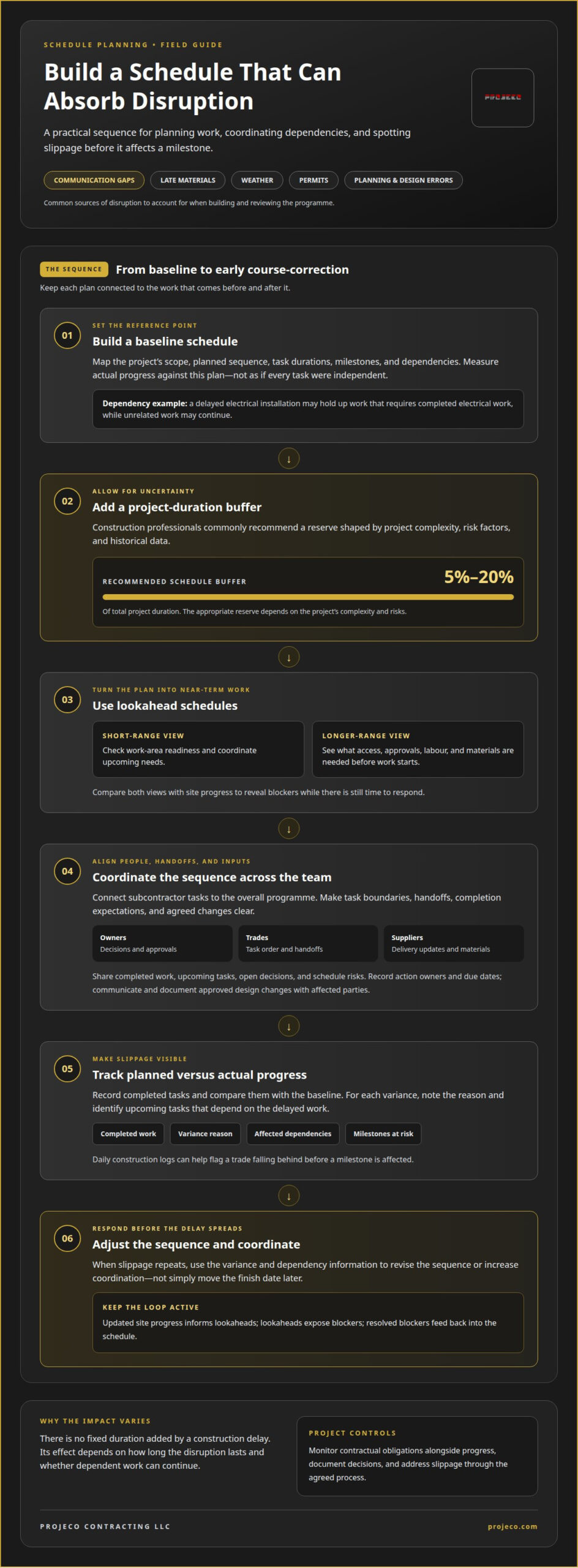
A baseline schedule sets the planned sequence, durations, and milestones against which actual progress is measured. It should reflect the project’s scope and dependencies, rather than treating every task as independent. Construction professionals commonly recommend a schedule buffer of 5% to 20% of total project duration, depending on complexity, risk factors, and historical data. That reserve can account for late deliveries, worker scheduling problems, and weather disruption.
Tracking completed tasks against the baseline makes slippage visible before a milestone is missed. A project manager can compare planned and actual completion, record the reason for a variance, and identify upcoming tasks that depend on the delayed work. Daily construction logs can help flag a trade falling behind before it affects a milestone. Repeated shortfalls call for a revised sequence or closer coordination, not simply a later finish date.
Lookahead schedules turn the broad baseline into near-term work plans. A short-range lookahead helps teams check work-area readiness and coordinate upcoming needs. A longer lookahead provides visibility into access, approvals, labour, and materials required before work starts. Comparing these plans with site progress can reveal blockers while there is still time to respond.
Subcontractor schedules need clear task boundaries, handoffs, and completion expectations. If one crew finishes late or leaves work incomplete, the next crew may lose access or have to repeat work. Connect each subcontractor’s sequence to the overall programme and record agreed changes. Incomplete handoffs can lead to rework, slowdowns, and disputes over responsibility.
Contractual obligations also affect the schedule. A subcontractor’s failure to meet bonding, licensing, or other contract requirements can expose a project to legal challenges or conflicts. Project managers can monitor these obligations alongside progress, document decisions, and address slippage through the agreed process. A disciplined baseline and lookahead approach is central to managing common construction delays and avoiding preventable ones.
Communication with subcontractors, suppliers, and owners
In construction projects, unclear updates can turn a small decision delay into stalled work, rework, or disputes. Clear communication connects each trade’s sequence with owner decisions, supplier deliveries, and current site progress.
Coordination Between Project Parties
Coordination aligns responsibilities, decisions, and handoffs among owners, contractors, subcontractors, and suppliers. It matters because one party’s delay can prevent another from starting, even when the next crew is ready. For example, an unapproved finish selection can hold up ordering and leave installers without materials. Shared milestones make these dependencies visible before crews arrive.
Set realistic milestones and agree who provides each input, who approves it, and when it is needed. Project updates should identify completed work, upcoming tasks, open decisions, and schedule risks. If a supplier’s delivery date changes, the team can assess affected tasks and revise the sequence before the installation crew is left waiting.
Collaboration Across the Project
Collaboration is the regular exchange of information that helps project parties solve problems together. Subcontractors need clear expectations and relevant updates, not just instructions at the start. Regular coordination meetings can surface access conflicts, incomplete handoffs, and overlapping work. Recording action owners and due dates helps everyone see what needs to happen next.
Detailed sequencing is especially useful when trades share a work area. If electrical work must finish before a wall is closed, communicate its completion status and any outstanding items before the next trade begins. Otherwise, crews may overlap, wait for access, or reopen finished surfaces. Record these handoffs to keep progress and responsibility clear.
Changes require the same discipline. When an owner or designer revises a detail, promptly communicate the decision to affected subcontractors and suppliers, then document the approved change. This helps prevent one crew from following an outdated drawing while another works from the revision. Prompt approvals also help teams assess effects on procurement, task order, and milestones.
Keep updates accessible to the people responsible for acting on them. Older spreadsheets or on-premise software can delay productivity information by days, weeks, or months. A current shared record gives project participants a clearer view of decisions, costs, and progress. For residential fit-out work, discuss coordinated project planning when several trades or owner decisions must align.
Construction material shortages and delivery issues
A material shortage becomes a schedule problem when a required item is unavailable at installation. Late deliveries, back orders, and equipment failures can reduce site productivity and leave dependent work waiting.
Material Availability and Delivery
Material availability means having the right components on site when a task is scheduled. A missing fixture, finish, or electrical component can interrupt installation and delay follow-on work, even when workers and equipment are ready.
Procurement planning should connect each material to its specification, approval status, supplier, and required delivery date. Teams can use purchase records and industry data to forecast supplier lead times, then track orders against those dates. For critical components, identify three to four acceptable alternatives early and secure approval before a shortage arises. Storing essential materials on site or nearby can also reduce exposure to delivery disruption, where storage conditions and access permit. For specialized exterior upgrades such as custom window replacements, working with established specialists like Galaxy Home Remodeling helps secure accurate lead-time estimates and avoid costly project hold-ups.
Lead Times and Supply Chain Issues
Lead time is the interval between ordering a product and its arrival, and supply-chain disruption can make that interval difficult to predict. Ordering materials 24-48 hours in advance is no longer realistic amid disruptions; forced minimum lead times have grown to two or three weeks, or longer depending on the product. Some warehouses and distribution centres have reported delays of six months or longer.
These risks make early procurement and regular supplier updates essential. A back-ordered item may affect a critical-path task, while a last-minute specification change can make an existing order unusable. Confirm selections before ordering, record expected delivery dates, and review order status so teams can respond while resequencing remains possible. Imported materials add another dependency, so account for procurement risks rather than assuming immediate availability.
Materials are not the only source of construction delays. Equipment failure can stop work even when components are ready; equipment maintenance records can help teams identify machinery that needs attention. Safety incidents can also interrupt work. Training employees in safety rules and establishing emergency plans helps crews prepare for disruption without compromising safe practices.
Financing and cash flow also affect procurement. Delayed progress payments or funding difficulties can postpone material orders, site delivery, or approvals. Accurate estimates help teams plan for materials, wages, and other project costs. If an order is delayed, project managers can assess dependent tasks, coordinate an approved alternative, and protect unaffected work from lost productivity.
External causes, including weather and permits
Weather, permit processing, utility issues, soil conditions, and imported materials can disrupt construction. Planning for these risks helps teams protect the schedule while keeping site decisions safe and orderly.
Weather Planning and Safe Work Practices
Weather planning means matching outdoor activities to conditions and allowing the schedule to absorb slower working periods. It matters because rain or other unsuitable conditions can interrupt excavation, concrete work, exterior framing, and landscaping. Project teams can plan critical outdoor tasks for favourable seasons where possible, include weather buffers, and use temporary enclosures or heating when appropriate. Safe practices remain essential when conditions change.
Unpredictable Weather Emergencies
Weather emergencies are sudden events that make site work unsafe or prevent access. Flooding, for example, may require crews to clean the site before work resumes, while rain can affect excavation or concrete activities. Teams can prepare emergency plans, train workers in safety procedures, and identify indoor or otherwise suitable tasks that can continue. Once conditions improve, assess the affected area before restarting.
Weather-Related Delays
Weather-related delays happen when conditions interrupt a task or prevent the next activity from starting. Rain can affect ground preparation, while prolonged unsuitable conditions may disrupt exterior work and landscaping. Schedules should allow for slower progress during extreme weather rather than assume every outdoor task will proceed as planned. Waterproof gear and suitable alternative tasks can help crews continue during wet conditions.
Permits and inspections create another external dependency. Documentation gaps, processing backlogs, or regulatory changes can hold work until approval or inspection is ready. Applying for permits and arranging inspections early gives teams time to address missing documents and adjust the sequence. Link each approval to the work it enables, so crews are not scheduled before the relevant clearance is available.
Site conditions add further uncertainty. Unstable soil or underground obstructions may change excavation plans, while utility issues can affect access or sequencing. Evaluating the site before work begins helps identify constraints and inform the schedule. For imported materials, account for delivery dependencies rather than assuming immediate supply.
For weather-sensitive work, review the forecast, work area, materials, and safe alternatives before assigning crews. If conditions prevent the planned activity, document the impact and revise the sequence. This helps distinguish unavoidable disruption from preventable delay while keeping safety and realistic progress central to decisions.
Permit, planning, management and design errors
Permit gaps, incomplete planning, weak project management, and design flaws can delay work before or after it begins. In the UAE, approval and access requirements depend on the project’s location, scope, and site conditions, so teams need to account for them in the programme.
Early Permit Applications
Applying for permits early gives teams time to address documentation gaps, processing backlogs, or regulatory changes before they block scheduled work. During pre-construction planning, identify required permits and inspections, then connect each approval to the activity it enables. A missing approval can leave a crew or equipment waiting, so include approval milestones and responsible parties in the schedule.
Planning problems can start with documents that leave the scope unclear. Before work begins, review drawings, specifications, and contract documents together, then resolve gaps between them. A detailed contract and schedule cannot eliminate delays, but this review can uncover conflicting assumptions before they become site changes. Site evaluations can also reveal ground conditions or access constraints that affect the planned sequence. In custom home renovations and new builds, design-build contractors such as TimberworX Construction Group emphasize this early coordination phase to resolve structural and design details before breaking ground, helping homeowners avoid costly downstream changes.
Permits and Site Access
Site access means having the necessary permission and a practical route for workers, materials, and equipment to reach the work area. Approved work cannot proceed as planned if the site is inaccessible or deliveries cannot reach their destination. Identify access needs before mobilisation and include them in site planning, alongside permit and inspection milestones.
Access constraints can also affect work sequencing. A delivery route shared with active work areas, for example, may need coordination so material handling does not obstruct crews. Identify access dependencies, assign responsibility for resolving them, and update the programme when conditions change. This helps distinguish access delays from productivity issues or subcontractor handoff problems.
Location-Based Rules and Delay Risks
Location-based risks include the approval, access, and site-condition requirements that apply to a particular project. A schedule that overlooks them may place work before necessary approvals or access arrangements are in place. In the UAE, project location and scope shape the requirements teams need to account for, while site conditions can add further constraints.
Design errors and late revisions create another chain of delay. A misplaced window discovered after plastering, for example, can require rework and disrupt finishing. Teams can coordinate design details before construction, check drawings against the intended scope, and document approved changes promptly. For a project involving permits, design coordination, or site access, discuss your project planning.
Projeco Contracting LLC | Villa Construction | Apartment Interiors Fit Out
Projeco Contracting LLC | Villa Construction | Apartment Interiors Fit Out helps homeowners bring renovation and residential interior projects together through coordinated planning and execution. Its Home Renovation, Residential Interior, Villa Renovation, and Villa Fit Out services suit projects where design decisions, material selections, and construction work need to align.
Consider this support when planning a home or villa project and you want the scope, design intent, and site work considered together. Clear decisions and coordination can address delay risks before they disrupt progress, although external uncertainties can still affect a schedule.
Contact Projeco Contracting LLC | Villa Construction | Apartment Interiors Fit Out to discuss your project.
Set Your Project Up for a Strong Start
Before work begins, turn your priorities into clear project decisions. Define the scope, identify who can approve changes, and establish how updates will be recorded. This gives the project team a shared reference when new information or site conditions require a response.
Managing common construction delays and avoiding preventable ones starts with treating the schedule as an active management tool, not a fixed document. As the project develops, keep decisions aligned with the agreed scope and make emerging constraints visible early. Some external conditions remain outside the team’s control, but clear responsibilities help everyone respond purposefully.
For a home or villa project, the next step is to discuss the scope, priorities, and coordination needs with Projeco Contracting LLC | Villa Construction | Apartment Interiors Fit Out. Contact Projeco Contracting LLC | Villa Construction | Apartment Interiors Fit Out to begin a considered conversation about your project.
Frequently Asked Questions
How does poor planning lead to delays later in the project?
Poor planning creates gaps between the work sequence, required resources, and decisions needed on site. A crew, for example, may be scheduled before the preceding trade has finished or before a selected finish is ready for installation. These mismatches can lead to idle time, rushed changes, or rework. Reviewing task dependencies before mobilisation helps reveal conflicts between the intended sequence and site readiness.
How do weather conditions affect construction schedules, and how can delays be reduced?
Weather can affect whether outdoor work can proceed safely and whether site conditions suit the planned task. Keep weather-sensitive activities flexible and identify suitable indoor work that can be brought forward if conditions change. Teams can also protect exposed materials and work areas where appropriate. Once conditions improve, reassess site and task readiness before returning to the original sequence.
How can contractors prevent material shortages and late deliveries?
Reduce procurement risk by linking each order to an approved specification, required quantity, and installation need. Before releasing an order, confirm that selections and submittals match the current design, then track delivery commitments against upcoming work. On arrival, inspect materials for visible damage or discrepancies before crews rely on them. This gives the team time to resolve mismatches or adjust the sequence before installation.
How can poor planning, scheduling, and coordination cause construction delays?
Poor planning can put dependent tasks in the wrong order, assign the same work area to different trades, or overlook the time needed for decisions. A finishing crew, for example, may arrive before preceding work is complete, leaving its work area unavailable. Managers can review task logic, crew availability, access, and prerequisites together. Updating these assumptions as site conditions change keeps the schedule aligned with actual work.
How can permitting, inspections, and regulatory approvals be expedited?
Teams can reduce avoidable approval delays by identifying required submissions and inspections during project planning, then preparing complete, coordinated documentation. The applicable process depends on the project’s location and scope, so allow time for relevant review stages rather than assuming immediate approval. Assigning responsibility for each submission and tracking outstanding responses helps teams address documentation gaps promptly without scheduling dependent work prematurely.
How do labor shortages and subcontractor delays affect construction projects?
Limited worker availability can leave a trade unable to complete work at the planned pace, while a subcontractor delay may prevent dependent crews from starting. The impact is greater when the affected activity sits on the project’s critical sequence. Managers can review crew allocation and upcoming trade commitments, then consider whether unaffected tasks can proceed safely. Clear records of incomplete work also support practical handovers between crews.
What steps help prevent scope changes, design errors, and rework?
Use a controlled design record so site teams work from the same approved revision. Before construction, coordinate drawings with the agreed scope and resolve visible inconsistencies, such as conflicting dimensions or finish selections. Route proposed changes through a documented approval process before affected work proceeds. This helps limit conflicting instructions, prevents crews from relying on superseded information, and makes each change’s schedule impact easier to assess.
How should construction managers track schedules and identify delays early?
Managers should compare completed work with the baseline, record actual progress, and investigate each variance. A useful log notes the affected task, the constraint, its impact on dependent work, and who is responsible for the next action. Reviewing this information alongside near-term plans helps distinguish a one-off interruption from a recurring shortfall. That distinction supports a targeted response instead of prematurely changing the entire programme.