

What if the most sophisticated element of your home isn’t the rare marble or the custom lighting, but the absolute absence of friction during its creation? For many homeowners in Dubai, the journey toward a bespoke luxury interior often feels like a battle against fragmented project management and the persistent worry that the final execution won’t match the initial 3D renders. It’s a common frustration to see a visionary design diluted by technical oversights or stalled by the complexities of local authority approvals.
We recognize that you expect more than just a beautiful space; you require a seamless delivery that protects your time and your investment. This article explores the defining trends of 2026, from biophilic serenity to the rise of “midimalism,” while detailing how an integrated design-and-build approach eliminates traditional project risks. You’ll learn how to align your vision with Dubai’s new Law No. (3) of 2026 to ensure your property meets the highest safety and quality standards. We’ll preview the essential strategies for achieving a timeless home that significantly enhances your property’s value through meticulous execution.
Key Takeaways
- Learn how the 2026 definition of a luxury interior has evolved from overt opulence toward “Quiet Luxury” and experience-driven design.
- Identify the essential materials and artisan-level joinery techniques that define the next generation of high-end residential fit-outs.
- Discover how “Invisible Luxury” leverages intuitive technology and biophilic principles to create a sanctuary of wellness within the home.
- Understand the strategic advantages of a unified design-and-build approach in maintaining project continuity and execution precision.
- Navigate the complexities of Dubai authority approvals and regulatory standards to ensure a seamless transition from concept to handover.
Defining the Luxury Interior in 2026: Beyond Opulence
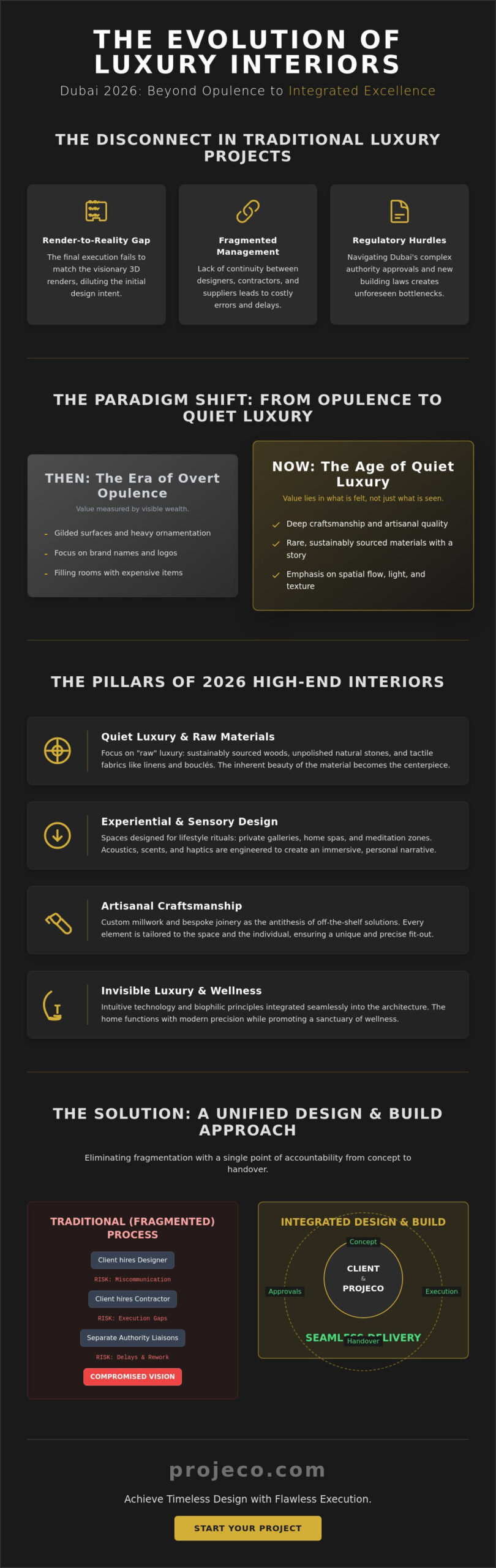
The concept of the luxury interior has undergone a radical transformation. In previous decades, opulence was measured by the visibility of wealth through gilded surfaces and heavy ornamentation. By 2026, the paradigm has shifted toward “Quiet Luxury,” where value is communicated through the depth of craftsmanship and the rarity of materials rather than their shine. This evolution prioritizes the emotional resonance of a space. It’s about how a room feels underfoot and how light interacts with texture. True prestige now lies in what is felt rather than what is merely seen.
Grandeur is no longer defined by filling a room with expensive items. Instead, it’s defined by spatial flow and the deliberate use of volume. A sense of luxury emerges from the luxury of space itself. High ceilings, expansive windows, and a logical progression between rooms create a sophisticated atmosphere that feels both airy and grounded. Customization has become the ultimate currency in this environment. Every element, from integrated cabinetry to bespoke floor patterns, serves as a reflection of the inhabitant’s specific values and lifestyle. This level of personalization requires a deep mastery of Interior design principles to ensure that bespoke elements don’t compromise the home’s structural integrity or aesthetic balance.
The Rise of Quiet Luxury and Minimalist Grandeur
Modern high-end design focuses on “raw” luxury. This includes the use of rare, sustainably sourced woods, unpolished natural stones, and deeply tactile fabrics like heavy linens and bouclés. By removing visual clutter, designers allow the inherent beauty of these materials to speak. Light plays a critical role here. It isn’t just a utility but a structural element that defines the boundaries of a room. 2026 luxury interiors are defined by a seamless blend of heritage craftsmanship and future-proof technology. This approach ensures that while a home looks timeless, it functions with the precision of the modern age.
Experiential Design: Creating a Narrative Within the Home
Design choices are increasingly driven by “Experience Design” rather than purely aesthetic preferences. High-end villas now incorporate spaces dedicated to specific lifestyle rituals. These aren’t just guest rooms or lounges; they’re private galleries, immersive home spas, and dedicated meditation zones. Sensory layers are vital to this narrative. Acoustics are engineered to provide a sense of calm, scents are integrated through HVAC systems, and haptic feedback is considered for every touchpoint. Projeco translates these personal client narratives into structural design elements, ensuring every square foot serves a purpose beyond decoration. You can view our recent work to see how these concepts come to life in our portfolio of luxury projects. Ultimately, the modern home is a sanctuary designed for living well.
The Pillars of High-End Fit-Out: Materials and Craftsmanship
The physical substance of a luxury interior serves as the bridge between a conceptual render and a lived-in reality. Sourcing materials for a discerning Dubai clientele requires a global perspective and a commitment to quality that transcends standard procurement. It’s no longer enough to choose the most expensive option. Instead, the focus has shifted toward materials that offer a unique narrative, such as reclaimed timber with a documented history or stones sourced from boutique quarries. This curation ensures that every surface tells a story of origin and excellence.
Integrating these elements requires a strategic understanding of environmental impact and longevity. Following the Five Principles of Sustainable Interior Design ensures that material choices promote long-term wellness and ecological responsibility. This approach is particularly relevant in the UAE, where the climate demands materials that are both resilient and low-emitting. The balance of aesthetics and endurance is the hallmark of a professional fit-out. It creates an environment that remains pristine despite the passage of time and the intensity of the local environment.
Artisanal Joinery and Custom Millwork
Off-the-shelf solutions represent the antithesis of a true luxury interior. High-end residential fit-outs rely on the technical precision of custom millwork to solve complex spatial challenges. This includes seamless hidden storage that disappears into wall paneling and integrated media units that feel like part of the building’s architecture. At Projeco, we view joinery as a structural art form. Our craftsmen focus on the minute details, such as shadow gaps and grain matching, to ensure a flawless finish that mass-produced furniture can’t replicate. You can explore how these bespoke elements transform spaces in our latest project gallery.
Rare Stone and Precious Metal Integration
The use of book-matched marble remains a hallmark of prestige, turning functional surfaces into large-scale focal points. However, the modern standard also incorporates advanced finishes like liquid metal and PVD (Physical Vapor Deposition) coatings. These technologies allow for the application of real metal textures onto complex shapes, providing a contemporary edge that is highly resistant to the UAE’s humidity and heat. The interplay of these reflective metals against deep matte stones creates a sophisticated visual rhythm. Achieving this balance requires a steady hand and an eye for precision. If you’re ready to refine your home’s materiality, consider how a specialized fit-out consultant can help curate your selection.
Invisible Luxury: Technology, Wellness, and Lighting
Prestige in a modern luxury interior is increasingly defined by what remains unseen. While previous sections focused on the tactile nature of stone and wood, the next frontier of high-end living centers on the “invisible” infrastructure that supports daily life. Smart home automation has evolved beyond simple voice commands into predictive systems that anticipate needs. These systems adjust climate, security, and media based on historical patterns and real-time data. This level of integration transforms a villa from a static structure into a responsive environment that actively enhances the inhabitant’s lifestyle.
Wellness-centric design is no longer an optional upgrade. It’s a foundational requirement for any premium fit-out. This includes medical-grade air purification and advanced acoustic insulation that creates a sanctuary of silence in the heart of a bustling city. The focus on human-centric environments aligns with broader 2026 Luxury Interior Design Trends, where the home is viewed as a tool for longevity and mental clarity. By prioritizing these invisible elements, designers ensure that the aesthetic beauty of the home is matched by its functional health.
Architectural Lighting: The Silent Designer
Lighting has transitioned from a functional necessity to a primary design medium. In a high-end luxury interior, light is used to sculpt space, define volumes, and highlight the intricate textures of bespoke materials. Designers now treat light as art, using layered schemes that include ambient, task, and accent illumination to create depth. This ensures that architectural features are celebrated even after sunset. To understand the technical nuances of this craft, you can discover the designer’s guide to architectural brilliance in Dubai lighting. This strategic approach creates a dynamic atmosphere that adapts to the time of day and the intended mood of the room.
Wellness and Biophilic Integration
Biophilic design bridges the gap between Dubai’s urban environment and the natural world. Integrating vertical gardens and indoor water features serves as more than just a visual statement. These elements improve air quality and provide a calming sensory backdrop. Designing for mental clarity involves a sophisticated understanding of environmental psychology. Circadian lighting systems improve occupant wellbeing by mimicking natural solar cycles, regulating sleep patterns and energy levels throughout the day. This intersection of nature and technology defines the modern sanctuary, providing a living experience that is as restorative as it is beautiful.
The Design & Build Advantage: Solving the Fragmentation Problem
The traditional separation between architectural design and site execution often creates a disconnect that compromises the integrity of a luxury interior. When the visionary and the builder operate under different contracts, the homeowner is frequently caught in a cycle of blame regarding delays or budget overruns. This fragmented approach is the primary reason why many premium projects fail to meet the standards set in the initial design phase. By contrast, a unified design-and-build model ensures that every technical detail is vetted for constructability before a single stone is laid.
Projeco’s approach to turnkey delivery prioritizes single-point accountability. This means the team responsible for the aesthetic vision is the same team managing the site, the sub-contractors, and the timeline. By overlapping the design and construction phases, we significantly reduce project durations. Procurement of long-lead items, such as rare marbles or custom lighting, begins early in the process. This strategic overlap prevents the “hidden extras” that typically emerge in fragmented contracting, providing clients with absolute cost transparency and a predictable path to completion.
Eliminating the Communication Gap
Integrated teams prevent design intent from being lost during the transition to the construction site. We utilize Building Information Modelling (BIM) to create a digital twin of the project, allowing us to identify and resolve structural conflicts long before they impact the schedule. This technological precision ensures that the final execution is an exact mirror of the approved 3D renders. You can explore our portfolio of integrated design and build projects in Dubai to see how this cohesion results in superior craftsmanship and architectural harmony.
Turnkey Luxury: From First Sketch to Key Handover
There’s a significant psychological benefit for a homeowner in having a single point of contact. It removes the stress of managing multiple vendors and navigating complex logistical hurdles. Our focus on accountability as a core service ensures that every stage, from the first sketch to the final key handover, is handled with meticulous care. For a practical example of this model in action, consider this high-end apartment fit-out as a model for turnkey success. If you’re looking for a seamless delivery for your next project, our team is ready to provide a comprehensive consultation to align your vision with our execution expertise.
Navigating the Luxury Journey in Dubai: Approvals to Handover
Achieving a flawless luxury interior in Dubai requires more than creative vision; it demands a deep mastery of the emirate’s rigorous regulatory framework. The journey from a conceptual render to a physical reality is governed by a sequence of mandatory approvals that ensure safety, structural integrity, and aesthetic compliance. For the international homeowner, these bureaucratic layers can appear daunting. However, navigating this landscape is a critical component of professional project management, ensuring that your investment is protected and legally compliant from day one.
Recent legislative updates have further elevated the standards for residential projects. Under Law No. (3) of 2026, which came into effect in May 2026, all buildings in Dubai must obtain a “Quality and Safety Certificate.” This law applies to private developments and free zones alike, with non-compliance resulting in significant penalties. A premier contractor doesn’t just design for beauty; they design for compliance. By integrating these legal requirements into the initial planning phase, we prevent the delays and fines that often plague fragmented projects. This proactive stance is what separates a standard renovation from a truly professional high-end execution. For those specifically transforming a residence, our comprehensive guide to the luxury apartment interior in Dubai details how these regulatory requirements apply to high-rise and multi-unit properties.
Securing Dubai Authority Approvals
The approval timeline typically begins with obtaining No Objection Certificates (NOCs) from the relevant developer or master authority. Whether your property is situated in the Palm Jumeirah, Emirates Hills, or Downtown Dubai, each community maintains specific architectural and technical guidelines. Following the NOC, the project must secure permits from the Dubai Municipality (DM) or the Dubai Development Authority (DDA), alongside Civil Defence approvals for fire safety systems. Projeco streamlines this entire process, acting as the primary liaison between the client and the authorities. Our established relationships and technical expertise allow us to secure permits efficiently, keeping the project on schedule without compromising on the design’s complexity. For a comprehensive understanding of the full regulatory roadmap, our 2026 guide to navigating approvals in Dubai for luxury fit-outs and construction provides a definitive breakdown of every stage from NOC to final sign-off.
The Final Handover: Excellence in the Details
The transition from a construction site to a refined residence concludes with a rigorous snagging process. This phase involves a room-by-room inspection to ensure that every finish, from the joinery alignments to the stone polishing, meets our uncompromising standards. We also conduct comprehensive testing of all Mechanical, Electrical, and Plumbing (MEP) systems to ensure peak performance. A successful luxury handover is marked by zero snags and a fully operational smart-home ecosystem. Beyond the handover, our commitment continues through dedicated support, ensuring that your luxury interior remains a masterpiece of comfort and functionality for years to come. If you’re ready to begin your journey toward a bespoke Dubai residence, our team is available for a private consultation to discuss your requirements.
Realizing the Future of High-End Living in Dubai
The transition toward a 2026 luxury interior requires a sophisticated balance of aesthetic restraint and technical precision. We’ve explored how the definition of prestige has shifted from overt opulence to “Quiet Luxury,” where wellness-centric technology and biophilic integration serve as the new benchmarks of quality. Achieving this vision depends on a unified approach that bridges the gap between conceptual design and complex site execution. By choosing an integrated model, you eliminate the risks associated with fragmented project management and ensure your home meets the latest regulatory standards.
Projeco stands as a Dubai-based expert design and build firm, providing turnkey solutions for luxury villas and apartments. We specialize in high-end residential and commercial fit-outs that prioritize accountability and meticulous craftsmanship. Elevate your living space with Projeco’s bespoke Design & Build solutions. Your journey toward a timeless, high-value property begins with a partner who understands that true luxury is found in the perfection of the details. We’re ready to transform your vision into a flawless reality.
Frequently Asked Questions
What is the difference between a standard interior and a luxury interior?
A luxury interior is distinguished by bespoke craftsmanship and the use of rare, high-performance materials rather than off-the-shelf components. While standard interiors prioritize cost-effectiveness and generic aesthetics, luxury spaces focus on personalized narrative and experience design. This involves custom millwork, artisanal finishes, and integrated technology that creates a unique environment tailored specifically to the inhabitant’s lifestyle and sensory preferences.
How long does a luxury villa interior fit-out typically take in Dubai?
A comprehensive luxury villa fit-out in Dubai typically requires between four and eight months for completion. This timeline accounts for the initial design phase, the procurement of long-lead international materials, and the mandatory authority approval process. Complex structural modifications or ultra-bespoke artisanal requirements may extend this duration. A unified design-and-build approach helps optimize this schedule by overlapping the design and construction phases.
Why is the Design & Build model better for luxury renovations?
The Design & Build model is superior for luxury renovations because it provides single-point accountability and eliminates the communication gap between architect and contractor. This ensures that the original design intent is executed with technical precision. By managing the entire lifecycle of the project, from initial concept to authority approvals, the team can prevent budget overruns and ensure that the final execution perfectly mirrors the 3D renders.
What approvals are required for an interior fit-out in Dubai?
Interior fit-outs in Dubai require permits from several entities, including the Dubai Municipality or the Dubai Development Authority. Additionally, Civil Defence approvals are mandatory to ensure fire safety compliance. Depending on the property’s location, you must also obtain a No Objection Certificate (NOC) from the master developer, such as Nakheel for the Palm Jumeirah or Emaar for Arabian Ranches. Our detailed guide to securing approvals in Dubai for luxury fit-outs outlines each of these requirements and how to navigate them efficiently.
How does Projeco ensure the quality of bespoke joinery and materials?
Projeco maintains quality through a combination of in-house artisanal craftsmanship and advanced Building Information Modelling technology. We source rare and sustainable materials from a global network of trusted suppliers to ensure authenticity. Every piece of bespoke joinery is fabricated with technical precision, undergoing rigorous inspections before installation to guarantee that the final finish meets the highest international standards of excellence.
Can I stay in my villa during a luxury interior renovation?
Staying in your villa during a luxury interior renovation is generally not advisable due to the scale of structural and technical work involved. Premium projects often require significant changes to MEP systems, floor replacements, and the installation of heavy custom millwork. For safety and to maintain the efficiency of the construction timeline, it’s best to vacate the premises until the final handover is complete.
What are the latest trends in luxury interior design for 2026?
The 2026 landscape is dominated by “Invisible Luxury,” which integrates advanced wellness technology like circadian lighting and medical-grade air purification. Biophilic design remains a staple, bringing natural elements into the home through vertical gardens and indoor water features. We also see a shift toward “midimalism,” a curated balance that emphasizes tactile textures and organic shapes over stark, cold minimalism. Homeowners seeking to apply these principles to a high-rise residence can find detailed guidance in our 2026 Dubai design guide for the luxury apartment interior.
How much does a luxury interior design and fit-out cost per square metre in Dubai?
Industry data for 2026 indicates that luxury residential fit-out costs in Dubai typically range from AED 275 to AED 400 per square foot. Ultra-luxury projects involving the rarest materials and international collaborations can exceed AED 800 per square foot. These figures reflect the premium placed on artisanal craftsmanship, smart home integration, and the high-performance materials required to achieve a truly bespoke finish.